-
 Gulf waters have been one to three degrees warmer than average across much of the basin, which is “just a hair, about a tenth of a degree or so above the prior records," according to a climate scientist.
 -
 Tampa’s University Area lost millions of dollars when the Trump administration cancelled the Environmental and Climate Justice Block Grant program. Eighteen months later, organizers are still determining the best path forward.
 -
 The threat of hurricanes and costs of insurance are pushing residents into former citrus lands and inland communities.
 -
 Gov. Ron DeSantis signed a law two years ago removing references to “climate change” from statutes. Now, a WUSF investigation shows how textbook authors were asked to do the same.
 -
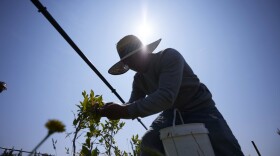 Research shows heat amplifies the dangers of pesticides for farmworkers, and that the problem is poised to grow as the global climate warms.
 -
 Resilient Florida was created to provide funding to help communities prepare for the impacts of more frequent and severe flooding, but not all who are at risk get the help they need.
 -
 Greenville and Mount Dora show how some communities applaud Resilient Florida for its flood help and others don't know they're eligible.
 -
 Progress Village was established decades ago to provide affordable housing for Black residents near Tampa. The phosphogypsum stack, containing the toxic waste of fertilizer production, is right next door.
 -
 A federal bill would ban Florida shark dive operators from feeding sharks. Its sponsors say the ban is about safety. People who know the water, including fishers, doubt it would change much.
 -
 After the 2024 hurricanes, houses are moving up.
 -
 Underresourced farmworkers can experience physical and mental symptoms while working under the Florida sun. But heat is not their only worry, according to one advocate.
 -
 Gov. Ron DeSantis characterized the clean energy goals the law bans as “radical climate policies,” although experts say the law will not necessarily upend the plans.

© 2026 All Rights reserved WUSF
Play Live Radio
Next Up:
0:00
0:00
Available On Air Stations


